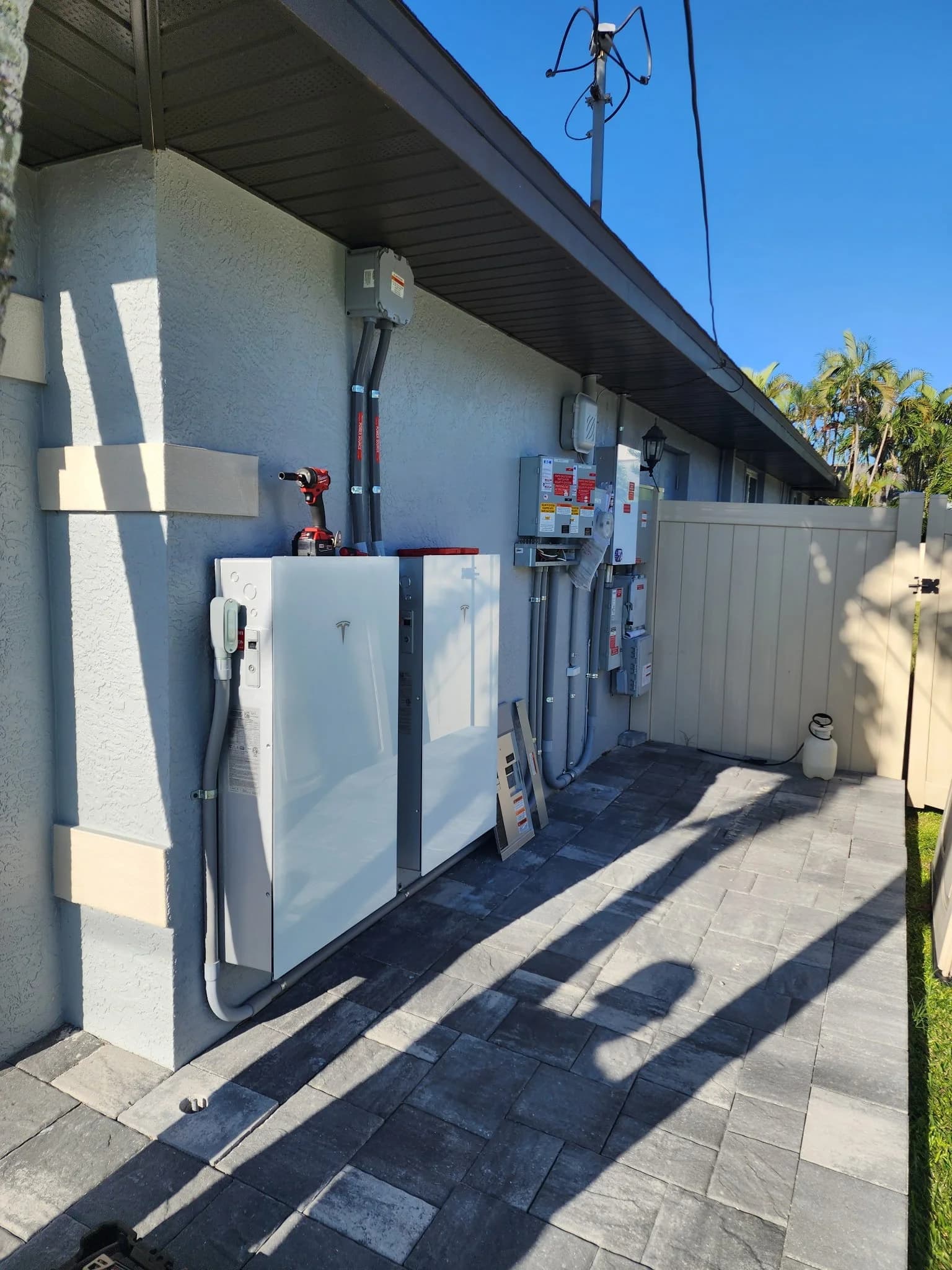
When the grid goes down, what stays on?
Battery backup isn't just about buying a battery. It's about deciding what needs to stay on, for how long, and what configuration actually makes sense. Build a plan around your home — no solar pitch required.
What do you want to keep running?
Pick your loads and goals and get a preliminary backup profile in about a minute — no contact info required to see it.
Step 1 of 3
When the grid goes down, what do you want to keep running?
Start with your goal — we'll tailor the rest around it.
No contact info needed to see your estimate. Multiple options. One better decision.
The honest variables
Battery capacity & charge
How many usable kWh you have, and how full it is when the outage starts.
Your actual loads
Fridge and lights sip power; AC and well pumps gulp it, with big startup surges.
Solar production
Panels can recharge the battery by day — but storm clouds cut production when you need it most.
Equipment startup
Motors (AC compressors, pumps) draw a surge to start that can exceed their running load.
System configuration
Which circuits are backed up, inverter limits, and whether the system supports solar during an outage.
Weather & duration
A short evening outage is very different from a multi-day post-storm event.
One battery, done right
Paired with solar, a single battery runs on a daily rhythm that can carry a home through a multi-day outage — as long as the sun cooperates.
Overnight
Run the essentials
After dark, one battery typically carries your essential circuits — fridge, lights, internet, key outlets — through the night.
Daytime
Solar refills + runs the house
When the sun comes up, your panels recharge the battery and power the home through the sunny hours.
Repeat
Ride out multi-day outages
That cycle can keep essentials going for days. Storms cut solar production, so we size for real conditions, not best-case.
Ready before the power even goes out
Storm Mode
Systems like the Tesla Powerwall include a Storm Watch setting in the app: when severe weather is forecast, it automatically tops off your batteries while the grid is still on — so you're full and ready the moment the power drops.
Protects an empty house
In humid Florida, a home with no power gets damp fast — and mold can follow, especially a seasonal home sitting empty. A battery keeps essential circuits (and humidity control, where it's sized for it) running, so the house stays protected even when you're away.
Automatic & silent
No cords, no switch, nothing to start. When the grid drops, backup kicks in within a fraction of a second — you may not even notice the lights flicker.
A better alternative to a gas generator
A generator runs large loads as long as you have fuel — but it's noisy and smelly, needs regular maintenance, and someone has to keep refilling it, often in the middle of a storm. A battery is silent, automatic, needs no fuel, and recharges itself from your solar. Some homes still keep a generator for the heaviest loads — we'll weigh a battery, a generator, or a hybrid against your goals, not sell you the most expensive box.
Your battery is covered
On the lease program, the battery isn't just installed and forgotten. It's maintained, insured, and warrantied as part of the agreement — and if it isn't performing the way it should, it gets replaced. You get the backup without owning the risk.
- Maintenance included
- Insured under the program
- Warrantied performance
- Replaced if it underperforms
Coverage (maintenance, insurance, warranty, and replacement) is part of the lease/service agreement and depends on the specific program and its terms. Storm Watch and app features are provided by the equipment manufacturer (e.g., Tesla) — availability varies by system. Backup duration depends on battery capacity, load, weather, and solar; no battery powers a home indefinitely.
Not sure a battery pencils out? Start with your bill.
Upload a recent power bill and we'll show what you're paying — and whether backup, solar, or nothing yet makes the most sense.
Build a backup plan that fits your home
Tell us what you need to keep running during an outage and we'll size an honest option — battery, solar-plus-battery, or another path.
We compare the numbers. You decide. If solar isn't right for your property, we'll say so.