Your power bill is an operating expense. Treat it like one.
Power Done Better helps businesses and property owners evaluate electricity costs, solar, storage, efficiency, financing, and resilience as one financial decision. We start with the property and the economics — not a predetermined product.
Analyze your property
Answer a few questions and get a preliminary property energy profile — which strategies deserve investigation, and why. No contact info required to see it.
A few questions first — you'll get a preliminary energy profile before we ask for anything.
Let's analyze your property
No contact info needed to see your profile. We start with the property, not a product.
A whole-facility view, not a panel count
Depending on your property and goals, an analysis may weigh several levers together.
Demand management
Reducing costly demand charges that don't show up on a residential bill.
Energy efficiency
Lighting, HVAC, and controls that cut load before you generate a watt.
Resilience & continuity
Keeping revenue-critical operations running through outages.
Utility-rate exposure
Understanding your tariff, demand charges, and rate trajectory.
Homeowners lease. Businesses own.
Most homeowners lease — they don't have the tax appetite to use the credits. A business is different: when you buy the system, you stack the federal Investment Tax Credit with 100% first-year depreciation, and Florida adds a sales-tax exemption and an 80% commercial property-tax exclusion. That's what turns solar from an expense into a balance-sheet decision.
Benefit 1
30% federal ITC
A federal tax credit worth 30% of the system cost — more with domestic-content or energy-community adders. Nonprofits take it as cash via direct pay.
Benefit 2
100% depreciation
Taxpaying owners can expense the system's depreciable basis in year one (bonus depreciation) — a second large benefit stacked on top of the credit.
Benefit 3
Florida tax breaks
Solar equipment is exempt from Florida sales tax, and 80% of the added value is excluded from commercial property tax.
Federal solar incentives changed materially in 2025–2026 and now hinge on strict timing (new projects generally must be placed in service by Dec 31, 2027 unless construction was safe-harbored earlier). Tax benefits are entity-specific and depend on your tax appetite and ownership structure. General information, not tax, legal, or investment advice — confirm with your CPA and counsel.
See what it really costs after incentives
Move the sliders to watch the ITC and depreciation stack against the sticker price — and how it changes for a C-corp, a pass-through, or a nonprofit using direct pay.
Your project
Who owns it?
Federal ITC level
Base (under 1 MW, or prevailing-wage).
Net cost after incentives (est.)
$104,300
about 52% of the sticker price — simple payback ≈ 4.7 years.
When you own the system, you stack two federal benefits: the 30% ITC plus 100% first-year depreciation (the basis is reduced by half the credit first). Together they can bring the net cost to roughly half the sticker — the exact number depends entirely on your tax situation.
Estimate only — not tax, legal, or investment advice. Actual benefit is entity-specific and depends on your tax appetite, final cost, and current law (which changed materially in 2025–2026). Federal solar credits for new projects now hinge on strict timing — generally placed in service by Dec 31, 2027 unless construction was safe-harbored earlier. Confirm every figure with a licensed CPA before deciding. A real proforma comes from your bill and a site review.
Nonprofit or institution?
Churches, schools, and municipalities can now collect the 30%+ ITC as a direct cash payment (“elective pay”) — a door that was closed for years. It has real rules and timing, and we walk your board through them.
Why energy costs move asset value
Every dollar of energy savings flows into NOI — and at a market cap rate, that moves what the property is worth. Here's the illustrative impact.
The NOI lens
Energy savings flow into net operating income — which, at a market cap rate, moves the asset’s value.
Illustrative property-value impact
$307,692
A recurring $20,000 reduction in annual operating expense is $20,000 of additional NOI. At a 6.5% capitalization rate, that income is mathematically equivalent to about $307,692 of value.
Illustrative capitalization math only. Energy improvements do not guarantee a corresponding change in appraised or market value, which depends on many factors. This explains the financial concept — why recurring operating-cost reductions matter beyond the monthly bill — and is not a valuation or a savings claim.
Serious institutions already made the call
Across Southwest Florida and beyond, credible organizations have put real money into solar. We're not affiliated with them — they're simply evidence this pencils out at scale.
Fort Myers · banking
Suncoast Credit Union
Opened one of Southwest Florida's first fully solar-powered bank branches — right here in Fort Myers — and has since added solar at more than a dozen branches.
Naples · attraction
Naples Zoo
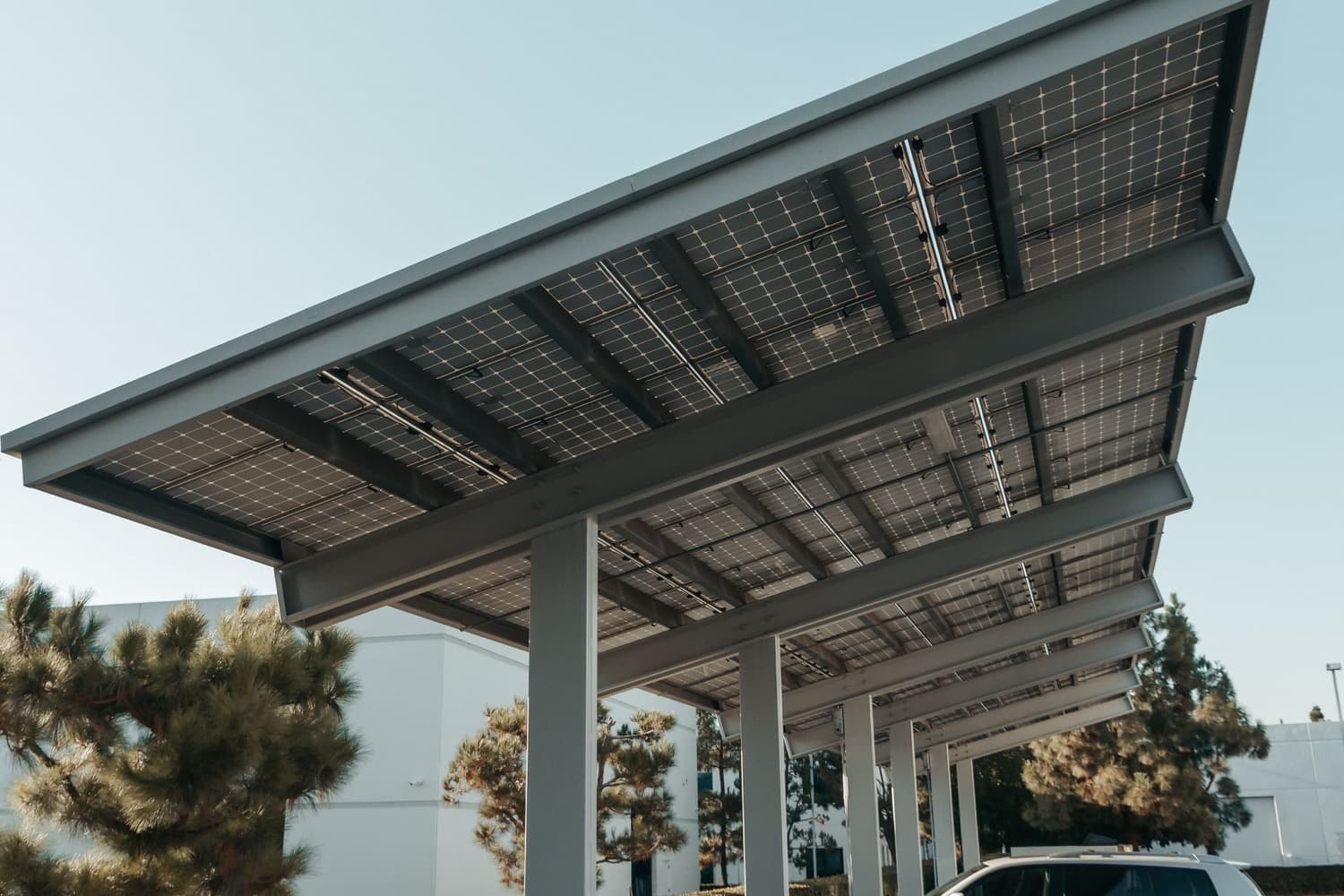
Installed roughly 200 kW of solar parking canopies that shade guests while powering the attraction.
Fort Myers · education
Florida Gulf Coast University
Runs a 2-megawatt on-campus solar field in Fort Myers — one of the larger university arrays in the state.
National · banking
JPMorgan Chase
Generated tens of thousands of megawatt-hours from its own panels across dozens of U.S. branches and offices.
Charlotte County · community
Babcock Ranch
A Southwest Florida town master-planned to run on solar — and it kept the lights on through Hurricane Ian.
Florida · healthcare & retail
AdventHealth · IKEA
Hospitals and major retailers across Florida have put megawatts of solar on their roofs to hedge energy costs.
Publicly reported installations, shown as evidence that credible institutions invest in solar. These organizations are not Power Done Better clients and do not endorse Power Done Better; sources on file.
Built for a range of facilities
Built for how your property actually runs
Tailored analyses for the property types we see most across Southwest Florida.
Restaurants→
Refrigeration & kitchen loads · HVAC and long operating hours
Multifamily→
Owner-paid common-area loads · Roofs, carports & parking
HOA / condo associations→
Common-area power (clubhouse, pools, gates) · Lighting, pumps & elevators
Warehouse & self-storage→
Large, low-obstruction roof · Predictable lighting & HVAC loads
Marinas→
Shore power & dock operations · Pumps & refrigeration
Golf & country clubs→
Clubhouse, kitchen & pools · Irrigation & cart charging
Build your commercial power plan
Start with your property and your bill. We'll evaluate solar, storage, efficiency, financing, and resilience as one financial decision — and tell you what's actually worth pursuing.
We compare the numbers. You decide. If solar isn't right for your property, we'll say so.