Can Solar Panels and Batteries Keep My AC Running During a Hurricane?
Yes, a solar-plus-battery system can keep central AC running during an outage. But AC is a heavy load with a startup surge, so honest sizing matters.
Last verified:
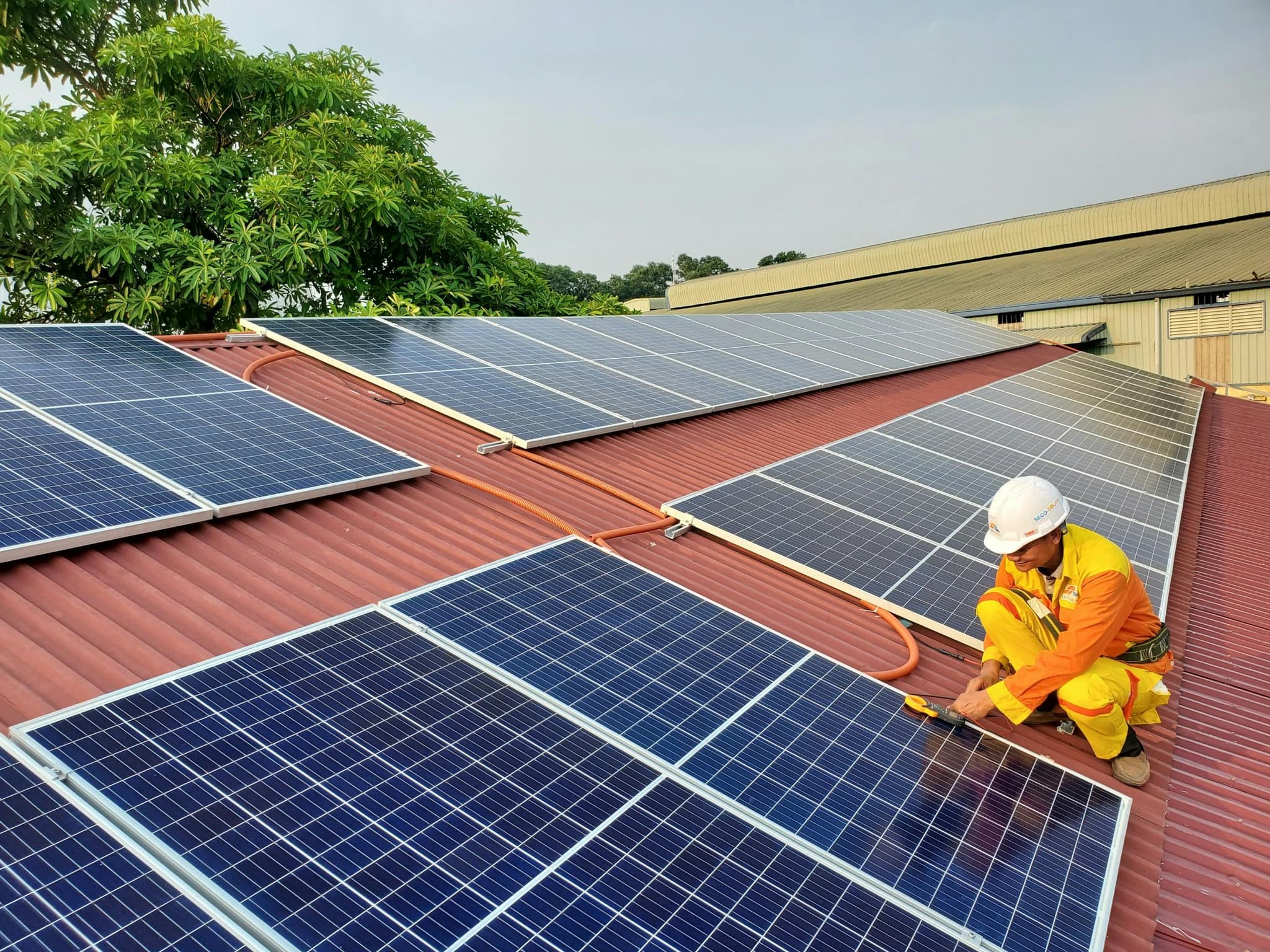
Short answer: Yes. A properly sized solar-plus-battery system can keep central AC running during an outage. But AC is the heaviest common load in a Florida home, and it draws a big surge every time the compressor starts. That usually means you need a larger battery paired with daytime solar to recharge, not the smallest option a salesperson quotes you.
Air conditioning is the whole ballgame in a Southwest Florida outage. If a battery can run your AC, it can run almost anything else in the house. If it can't, cooling one room with a window unit may be the realistic backup instead.
Why AC is the hardest load to back up
Central AC is not just a big continuous load. When the compressor kicks on, it pulls a short burst of current several times higher than its running draw. That startup surge is what trips undersized backup systems. A battery has to handle both the steady demand and the surge, and it has to do it dozens of times a day in August.
No battery runs a house indefinitely. Runtime depends on capacity, your actual load, the weather, how much sun your panels get, and startup surges from motors like the AC compressor.
How the solar-plus-battery combo actually works
During a daytime outage, your panels power the AC and recharge the battery at the same time. At night, the battery carries the load alone. The next morning, the sun refills it. That daily cycle is what stretches backup from a few hours into multiple days. Without panels feeding the battery, a single charge drains fast when it is running a compressor.
One important detail: a grid-tied solar system without a battery shuts off during an outage for safety, even in full sun. The battery and its backup-capable inverter are what let you keep power when the grid is down.
A realistic example
Say your 3-ton AC pulls roughly 3 kW while running and cycles a large part of each hour during peak heat. A single mid-size home battery of around 10 to 13 kWh might run that AC plus a fridge and a few essentials for several hours overnight, then rely on solar to recharge the next day. Want more cushion, or want to run the AC harder? You step up to two batteries. These are ranges, not promises, and your real numbers depend on your equipment and the weather.
Advantages and limitations, honestly
- Silent, automatic, and no fuel to store or haul during a storm.
- Solar recharges the battery each day the sun is out, which is the key to multi-day resilience.
- A cloudy stretch after a storm slows recharge, so plan for a margin, not a best case.
- Backing up the whole AC costs more than backing up a fridge and outlets. Some homeowners choose a smaller battery and cool one room instead.
Questions worth asking
- What is the running load and startup surge of my specific AC unit?
- How many kWh of battery do I need to run the AC overnight, and how fast will solar recharge it the next day?
- Does the proposed inverter support backup, and which circuits stay powered?
- What happens to runtime after several cloudy days following a storm?
• When this might not make sense
We'd rather lose a sale than put you in the wrong solution. Reasons we might tell you to wait or pass:
- —You mainly want to keep a fridge, phones, and a few lights alive. A smaller, cheaper battery does that without sizing for AC.
- —Your roof gets limited sun, so the battery can't reliably recharge during a multi-day outage.
- —Budget is tight and a portable generator for the essentials makes more sense for your situation.
Sources
- Enphase home energy and battery storage overview — Enphase EnergySecondary
- Tesla Powerwall and solar — TeslaSecondary
- U.S. Department of Energy home energy resources — U.S. Department of EnergySecondary
Find out what it takes to keep your AC on
We'll size a battery to your actual AC load and sun exposure, and tell you straight whether whole-home cooling or an essentials-only backup fits your budget.