FPL vs LCEC: Same Panels, Two Completely Different Games
Two neighbors, the same panels, opposite solar strategy — because one is on FPL and one is on a co-op like LCEC. Here's how each credits your solar, and why knowing your utility has to come before anyone quotes you a system.
Last verified:
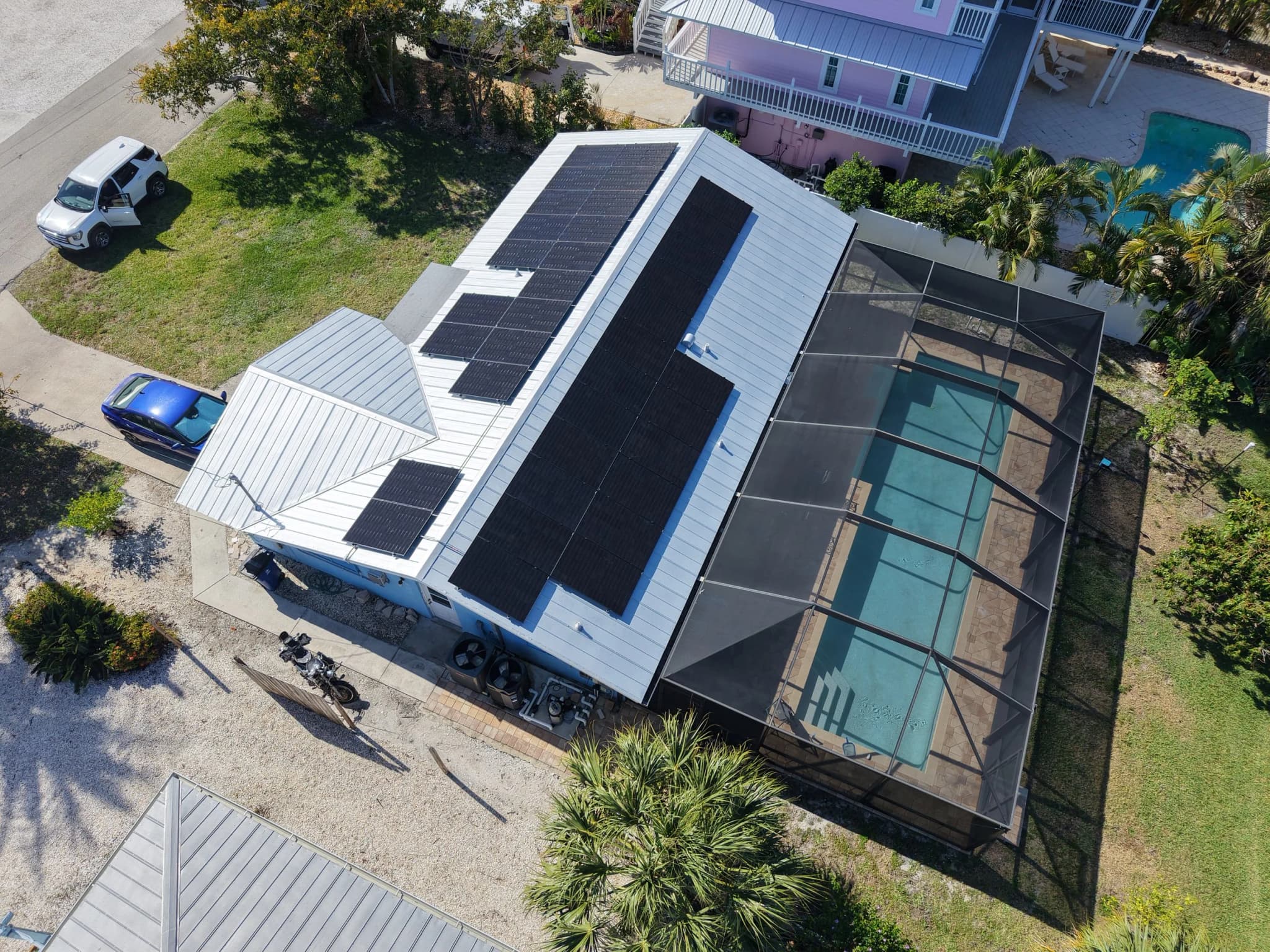
Short answer: It comes down to how each utility credits the power you export. FPL, an investor-owned utility under the Florida PSC, offers full-retail (1-to-1) net metering — your exported kWh are credited at essentially retail value, so sizing a little larger can make sense. LCEC is a member-owned cooperative not governed by the PSC's net-metering rule; it banks your excess as kWh and pays leftover at year-end at a low avoided-wholesale rate — so you size to your own usage, not to sell power back. Same roof, opposite strategy.
Here's a scenario that plays out across Southwest Florida: two neighbors put up nearly identical solar arrays, and the smart way to size and use each system is completely different — because one is an FPL customer and the other is on a cooperative like LCEC. Most solar advice online quietly assumes an investor-owned utility like FPL. In much of Lee County and Cape Coral, that assumption is simply wrong, and it can lead to an oversized, overpriced system. So before anyone quotes you panels, the first question is: who's your utility?
FPL: full-retail net metering
FPL is an investor-owned utility regulated by the Florida Public Service Commission, and it follows PSC Rule 25-6.065. Under that rule, when your panels produce more than you use, the excess kilowatt-hours are credited at essentially full retail value and roll forward month to month, with a year-end true-up for any surplus at a lower rate. In plain terms: on FPL, a kilowatt-hour you send to the grid is worth close to a kilowatt-hour you pull back. That's what makes it reasonable to size a system to comfortably cover your usage, since well-credited exports offset your nighttime and cloudy-day draw.
The important thing about FPL isn't a headline about rate hikes — it's the net-metering structure. Full-retail 1-to-1 credit under PSC Rule 25-6.065 is what shapes how you'd size a system, and a 2022 bill to roll it back was vetoed, so it remains in effect.
LCEC: a co-op that plays by different rules
LCEC is a member-owned electric cooperative, and this is the part that surprises people: because it's a co-op, it is not governed by the PSC's net-metering rule that applies to FPL. It sets its own board-approved terms. Under LCEC's program, the excess energy you send to the grid is accumulated as kWh reserves that you draw down to offset later usage — good value while you're offsetting your own consumption. But any reserves left over after the year-end period are paid out at LCEC's calculated avoided-wholesale rate, which is well below retail. The takeaway is direct: on LCEC, overproducing to 'sell power back' generally doesn't pay. You size the system to your own usage and let it offset your highest-cost kilowatt-hours.
Why this changes your whole strategy
- Sizing: on FPL, well-credited exports make sizing to fully cover usage sensible. On LCEC, oversizing past your own consumption sends power back for pennies — so right-sizing matters more.
- The 'sell power back' pitch: if a rep promises income from selling excess to the grid, that's a much weaker claim on LCEC than on FPL. Be skeptical of it either way.
- Interconnection details: co-ops set their own fees and tiers, so the practical hardware and paperwork can differ from FPL's process.
Don't let anyone quote you 'full retail net metering' as if LCEC works like FPL. Cooperatives set their own terms, and on LCEC the year-end buyback is well below retail. Confirm your exact utility and its current tariff before sizing anything.
Figure out your utility first
The five-minute homework is worth it: check a recent bill to confirm whether you're an FPL customer or on a co-op like LCEC, then understand how that utility credits exported solar under its current rules. Utility tariffs change, so verify against the utility's own current documents rather than an old proposal. Once you know the rules of your game, a system can be sized honestly to fit them — not sized to a generic template that assumes the wrong utility. If you're not sure which you have, we'll sort it out and model your options on your actual usage.
Questions worth asking
- Which utility am I actually on — FPL or a cooperative like LCEC?
- How does my utility credit the excess power I export, under its current rules?
- Is this system sized to my own usage, or oversized to overproduce?
- Does the proposal rely on selling power back, and is that realistic for my utility?
• When this might not make sense
We'd rather lose a sale than put you in the wrong solution. Reasons we might tell you to wait or pass:
- —A proposal that assumes FPL-style full-retail net metering while you're actually on LCEC or another co-op
- —An LCEC system oversized to 'sell power back' when the year-end buyback is well below retail
- —Any quote that skips confirming your specific utility and its current net-metering terms
Sources
- FPL Rates and Your Bill — FPL (2026)Primary
- LCEC Net Metering — LCEC (2026)Primary
- Net metering in Florida (PSC Rule 25-6.065 overview) — Solar United NeighborsSecondary
Not sure if you're on FPL or a co-op? We'll sort it in 5 minutes.
We'll confirm your utility, explain exactly how it credits solar, and size a system to your actual usage — no generic template that assumes the wrong rules.