LCEC Solar and Net Metering: A Homeowner's Guide
LCEC is a cooperative, so its net metering rules differ from FPL's. Here's how LCEC credits your solar, why oversizing rarely pays, and how to size a system right.
Last verified:
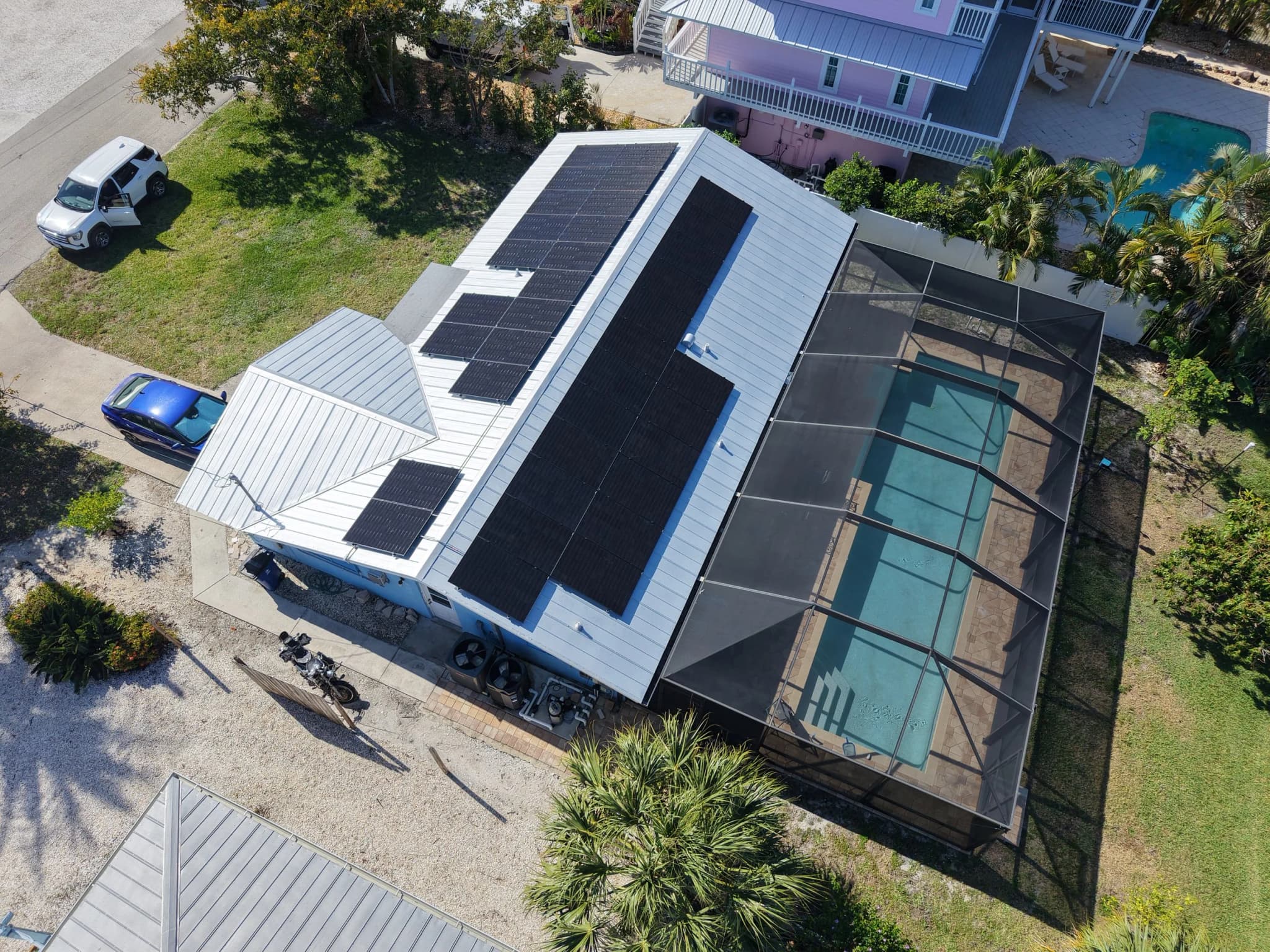
Short answer: LCEC is a member-owned cooperative, so it sets its own net metering rules and is not governed by the Florida PSC rule that applies to FPL. LCEC banks your excess solar as kWh to offset later use, then pays any leftover at year-end at a low avoided-wholesale rate. The practical takeaway: size your system to your own usage, not to sell power back.
Why LCEC is different from FPL
Most Florida net-metering advice assumes an investor-owned utility like FPL, which follows Florida PSC Rule 25-6.065 and credits exported solar at essentially full retail value. LCEC is a member-owned cooperative and isn't bound by that rule — cooperatives set their own board-approved terms. If you're in Cape Coral or much of Lee County, this distinction matters a lot.
How LCEC credits your solar
Under LCEC's net-metering program, excess energy you send to the grid is accumulated as kWh reserves that you draw down to offset later usage. Any reserves left after December billing are paid to you in January at LCEC's calculated avoided-wholesale rate for the prior year — a rate well below retail. In plain terms: your excess offsets your own later use at good value, but anything left over at year-end is bought back cheaply.
Bottom line: on LCEC, overproducing to 'sell power back' usually doesn't pay. The value is in offsetting your own consumption.
LCEC rates and the tier quirk
As of August 2026, LCEC's residential schedule has a $20 monthly customer charge and a rising three-tier energy rate (roughly 11.3¢, 12.1¢, and 12.8¢ per kWh as usage climbs), plus a small power cost adjustment. A typical 1,000 kWh bill is around $147. Because the top tier is the most expensive, solar that shaves your highest-usage kilowatt-hours offsets power at LCEC's highest rate — which can help higher-usage homes.
Interconnection: keep it simple
LCEC charges a small interconnection fee for systems up to 10 kW (around $35). Systems larger than 10 kW move into a higher tier that can require a $1,000,000 liability-insurance rider. For most homes, staying at or under 10 kW and sized to your own usage keeps things simple and inexpensive.
Questions worth asking
- Is this system sized to my usage, or oversized to overproduce?
- Does it stay within LCEC's simple interconnection tier?
- What does LCEC actually pay for my year-end excess?
• When this might not make sense
We'd rather lose a sale than put you in the wrong solution. Reasons we might tell you to wait or pass:
- —A proposal that assumes you'll profit by selling excess power back to LCEC
- —An oversized system that pushes you past the 10 kW interconnection tier without a reason
- —Anyone quoting you 'full retail net metering' as if LCEC works like FPL
Sources
- LCEC Rates — LCEC (2026)Primary
- LCEC Net Metering — LCEC (2026)Primary
- LCEC Fees & Charges — LCEC (2026)Primary
On LCEC and thinking about solar?
We'll size a system to your actual LCEC usage — not oversized to overproduce — and show you the honest numbers.