Pool-Pump Solar Math: Why High-Usage Homes Pencil Differently
Your pool is lovely. Your pool pump is expensive. In Southwest Florida it's one of the biggest quiet line items on a bill — which is exactly why a high-usage pool home can change the solar math. Here's the honest range framing.
Last verified:
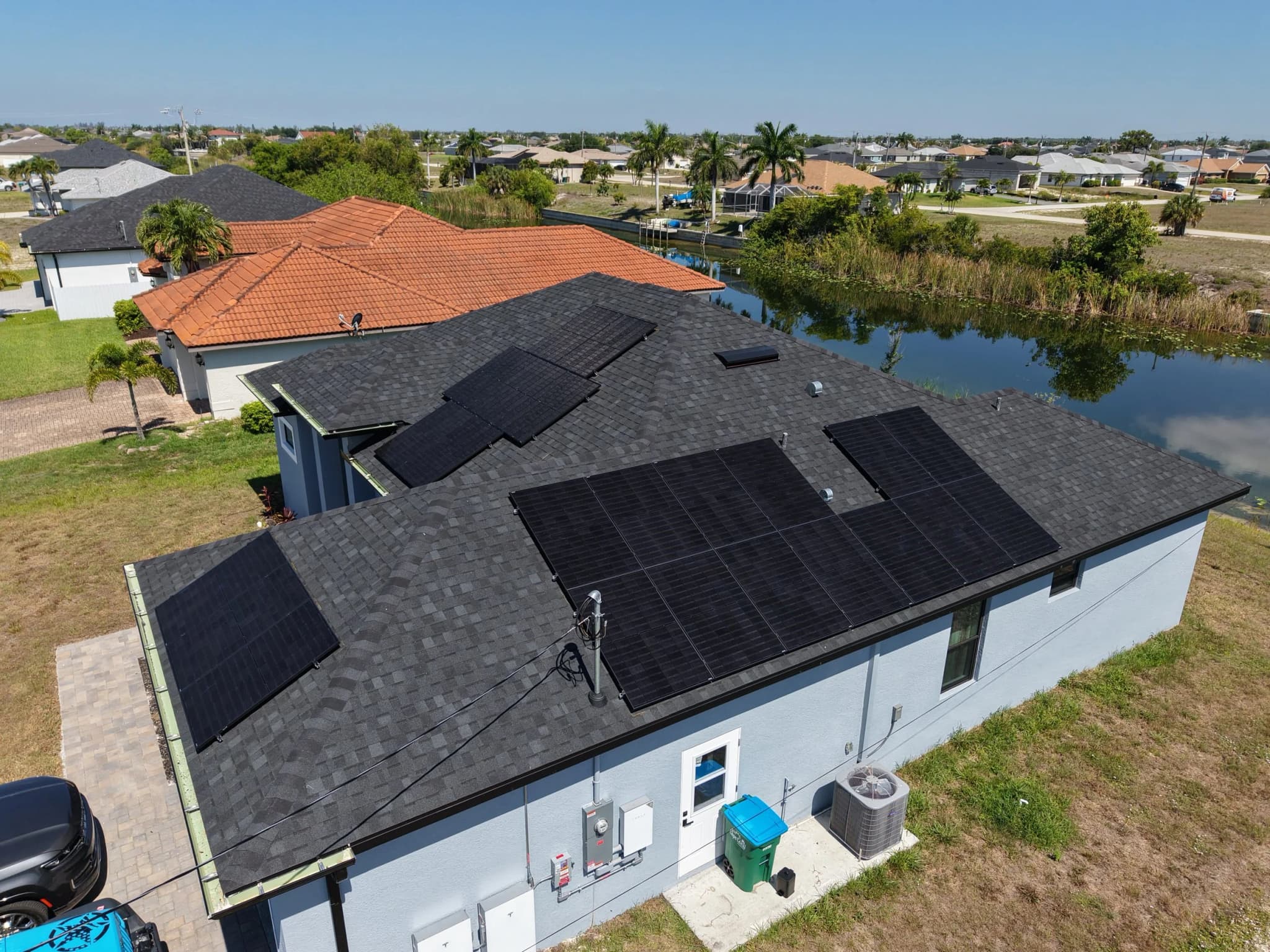
Short answer: A pool pump running long hours all summer is quietly one of the biggest lines on a Southwest Florida bill. That matters for solar because the case generally improves as usage rises: a home already buying a lot of power has more for solar to offset. Solar won't erase the pump, and the savings are a range that depends on your roof, your utility, and how hard that pump works — but a high-usage pool home is exactly where the numbers can get interesting. Two easy wins first: a variable-speed pump and a sane run schedule.
Nobody buys a Southwest Florida home for the electric bill, but if you've got a pool, the bill has opinions. A pool pump is a motor that runs for hours every day, often all year in our climate, and it does its work quietly enough that most owners never connect it to the number at the bottom of the bill. It's frequently one of the single largest loads in a pool home — and that fact is the whole reason solar can pencil differently for you than for your neighbor without a pool.
Why the pump costs what it does
The cost comes down to power draw times hours. An older single-speed pump runs flat-out whenever it's on, and many are scheduled to run far longer than the pool actually needs. Multiply a big motor by long daily hours by twelve months of SWFL swim season and you get a load that rivals or exceeds other major appliances. The good news is that this is also the most controllable part: the pump is one of the few big loads where you can cut usage meaningfully without cutting comfort.
Two wins before you even think about solar
- Variable-speed pump: running a pump slower for longer moves the same water using dramatically less energy than a single-speed motor at full tilt. For a high-hours pool, the reduction can be substantial — it's one of the better efficiency upgrades available to a pool home.
- A sane schedule: many pumps are set to run far longer than turnover requires. Right-sizing the daily run time to what your pool actually needs trims cost without turning the water green.
Fix the pump first, then size the solar. Solar sized around a wasteful pump just pays to power waste. A variable-speed pump on a right-sized schedule lowers the target — and makes any solar you add work harder.
Why high usage helps the solar case
Here's the counterintuitive part: solar tends to make more sense for homes that use more power, not less. If your bill is small, there's little for panels to offset and payback stretches out. If you're running a pool pump, multiple AC systems, and the usual SWFL summer load, you're buying a lot of kilowatt-hours at retail rates — and every one solar offsets is one you're not buying from the utility. A high-usage pool home is closer to solar's sweet spot than a small, low-usage house.
That said — and this is the honest part — 'higher usage helps' is not 'guaranteed savings.' Your actual range depends on your roof's orientation and shade, your system's cost and structure, and critically your utility. On FPL's full-retail net metering the math treats exported power one way; on a co-op like LCEC, where year-end excess is bought back cheaply, you size to your own usage rather than to overproduce. We model your real bill and your real pump, not a stock photo of someone else's pool.
How to check your own numbers
Start with a recent bill or two, ideally a summer month. Note your total usage and whether it's climbing. If you can, find your pump's type and run schedule. Then the question becomes concrete: what does a variable-speed pump and a right-sized schedule do to that number, and what would solar realistically offset on top of that? Text a photo of your bill and we'll run the pool math on your actual usage and show you the honest range — including telling you if it doesn't move the needle enough to bother.
Questions worth asking
- Is my pool pump single-speed or variable-speed, and how many hours does it run?
- What would a variable-speed pump and a right-sized schedule save before I add solar?
- Given my utility, does it make sense to size solar to cover the pump load?
- What's the honest savings range for my roof and usage — not a billboard average?
• When this might not make sense
We'd rather lose a sale than put you in the wrong solution. Reasons we might tell you to wait or pass:
- —Your overall usage is low despite the pool — payback on solar may stretch too far to justify
- —You'd size solar around an old, wasteful single-speed pump instead of fixing the pump first
- —Heavy roof shade or a roof near end-of-life that should be addressed before panels go up
Sources
- Pool pump energy use and variable-speed efficiency guidance — U.S. Department of EnergySecondary
- FPL Rates and Your Bill — FPL (2026)Primary
- LCEC Net Metering — LCEC (2026)Primary
Text a photo of your bill; we'll run the pool math.
We'll model your actual usage — pump included — and show you the honest range, plus whether a variable-speed pump or solar (or both) is the smarter move for your home.