Solar for Cape Coral Pool Homes
Pool pumps run year-round and add real load, which makes many Cape Coral homes strong solar candidates. On LCEC, the key is sizing to your own usage.
Last verified:
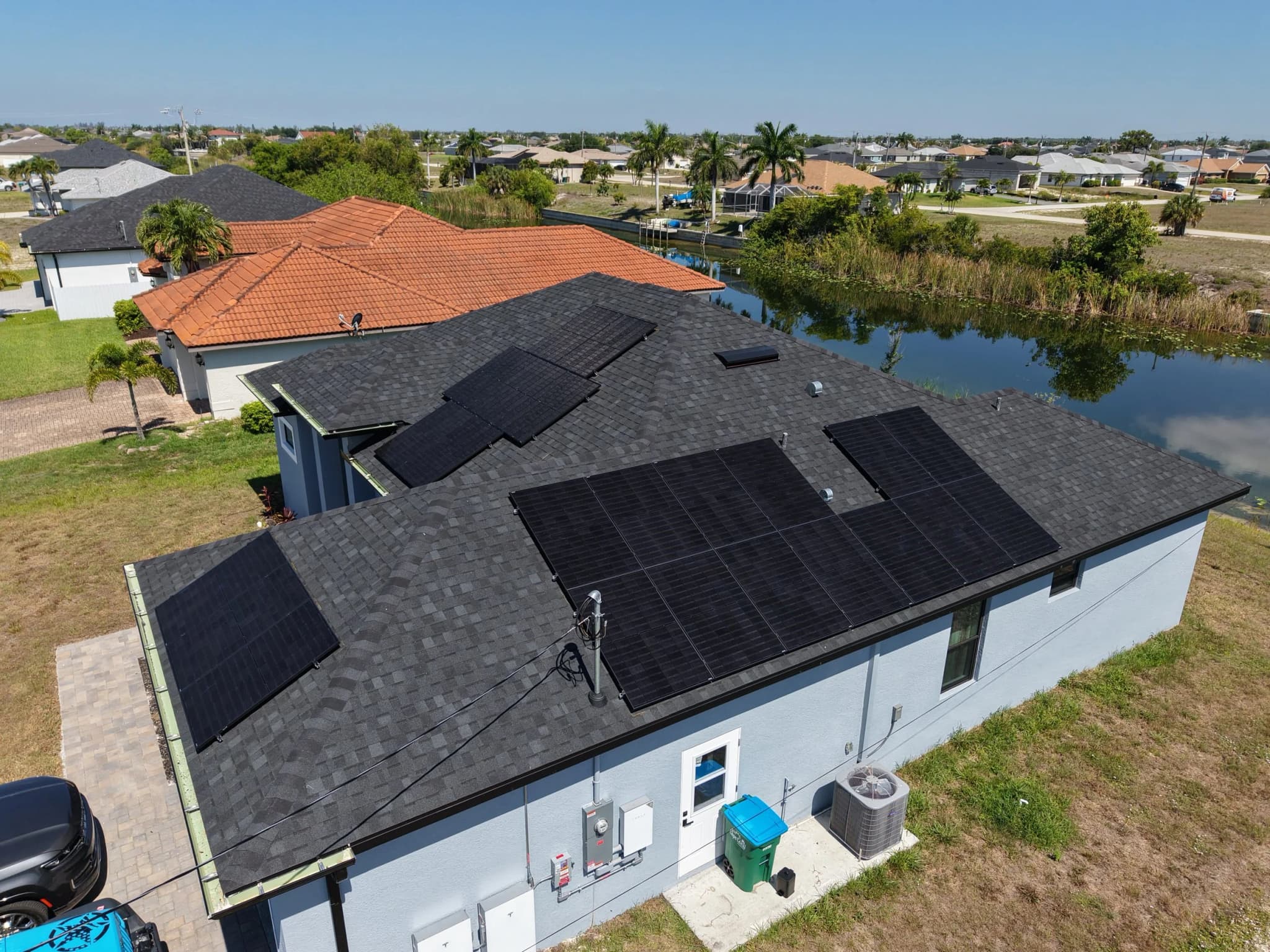
Short answer: Pool homes are often strong solar candidates because the pump runs year-round and adds steady load to your bill. On LCEC, the important rule is to size the system to your own usage, not to overproduce. LCEC is a member-owned cooperative that banks your excess solar as kWh and pays any year-end surplus at a low wholesale rate, so overbuilding to sell power back doesn't pay off.
Cape Coral is full of pool homes, and a pool changes the solar math in a good way. A pump that runs several hours a day, every day of the year, is a consistent load. Consistent load is exactly what solar offsets well.
Why a pool makes you a better candidate
A single-speed pool pump can be one of the largest recurring loads in a home, and in Florida it often runs year-round rather than seasonally. That steady daytime draw lines up neatly with when your panels produce the most. The more of your usage that happens while the sun is up, the more directly solar covers it. If you've ever wondered why your bill stays high even in mild months, the pool is often part of the answer.
How LCEC treats your solar, and why it changes sizing
This is the part that catches people off guard. LCEC is a member-owned cooperative, not an investor-owned utility. It is not governed by the Florida Public Service Commission net-metering rule that applies to FPL. Instead, LCEC banks your excess solar production as kilowatt-hours and credits it against later usage. If you have a surplus at the end of the year, LCEC pays it out at a low avoided-wholesale rate, which is well below the retail rate you pay.
The practical takeaway: on LCEC, size the system to your own usage, not to overproduce. Building extra panels to sell power back means giving away kilowatt-hours at a low wholesale rate. That's the opposite of a good deal.
The LCEC numbers worth knowing
For context on a typical LCEC residential bill: there's roughly a 20 dollar monthly customer charge, a tiered energy rate in the neighborhood of 11.3 to 12.8 cents per kWh, and a typical 1,000 kWh bill lands around 147 dollars. Interconnecting a residential solar system of 10 kW or less falls under LCEC's Tier-1 process, with an application fee around 35 dollars. Treat these as recent reference figures and confirm current rates and terms directly with LCEC before you commit.
A good candidate profile
- A pool pump that runs daily, year-round, keeping your baseline usage high.
- A monthly LCEC bill consistently above the typical range, with clear room to offset.
- A roof with good, mostly unshaded southern or western exposure.
- A willingness to size the array to your own annual kWh, not to chase overproduction credits.
If that sounds like your home, a pool home in Cape Coral can be one of the more straightforward solar cases in the area. The key is a system built around your actual usage and LCEC's cooperative rules, not a one-size-fits-all pitch.
Questions worth asking
- What is my annual kWh usage on LCEC, and how much of it is the pool pump?
- Is this system sized to my own usage, or is it built to overproduce?
- How will LCEC credit my excess production, and what happens to any year-end surplus?
- Would a variable-speed pool pump cut my load enough to change the right system size?
• When this might not make sense
We'd rather lose a sale than put you in the wrong solution. Reasons we might tell you to wait or pass:
- —Your LCEC bill is already low, so there's little steady load for solar to offset.
- —Heavy tree shade or a poorly oriented roof limits how much your panels can produce.
- —A proposal sizes the system to overproduce and sell back to LCEC, which pays only a low wholesale rate for surplus.
Sources
- LCEC residential rates — Lee County Electric CooperativePrimary
- LCEC net metering and interconnection — Lee County Electric CooperativePrimary
- National Renewable Energy Laboratory solar research — National Renewable Energy LaboratorySecondary
See what solar could do for your pool home
We'll pull your LCEC usage, factor in the pool load, and size a system to your own consumption, no oversized sales pitch, no overproduction giveaway.